How many international schools are in Muscat?
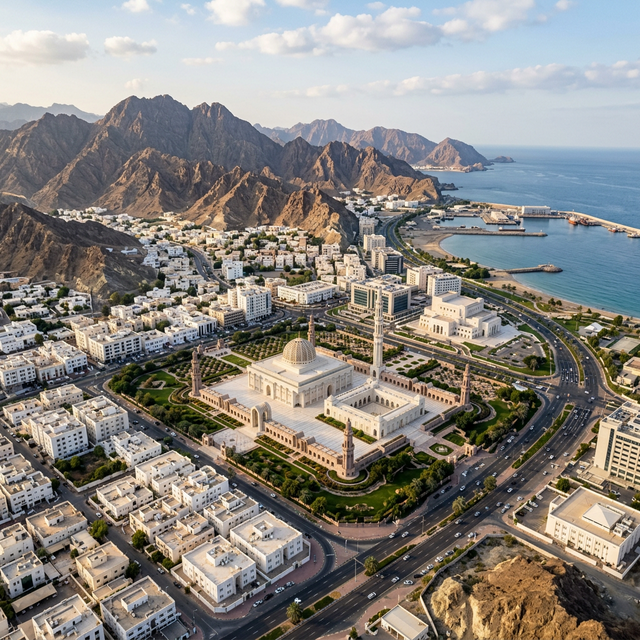
Muscat hosts 130+ private and international schools employing over 5,200 expatriate teachers. The school landscape is dominated by British curriculum (42 schools), followed by American (18), IB (12), bilingual Arabic-English (35+), and Indian (CBSE/ISC, 20+). Unlike Dubai where mega-groups dominate, Muscat’s schools are predominantly independent — creating more varied cultures and leadership styles.
Muscat schools tend to be smaller (average 800 students vs Dubai’s 1,800), which translates to: smaller class sizes (average 20 vs 25), more personalized attention, stronger staff-student relationships, and a genuine community feel. For teachers who felt anonymous in large Dubai or Riyadh schools, Muscat’s intimate school environments are a major draw. Return to Oman teaching guide.
British-curriculum schools
British School Muscat (BSM) — The gold standard. 1,100 students, COBIS member. Class sizes of 18. Stunning campus overlooking the sea. Packages: OMR 1,100–1,600 with provided housing in Qurum. Retention: 82%.
Sultan’s School — 1,800 students, bilingual excellence. Royal patronage gives access to exceptional resources and cultural events. Premium packages including villa housing.
American-curriculum schools
American British Academy (ABA) — 1,400 students, dual curriculum. Modern Azaiba campus. Strong athletics. Packages: OMR 900–1,400 + housing allowance.
American International School of Muscat (TAISM) — 750 students, NEASC accredited. Small, close-knit community. AP curriculum with IB option. Family-oriented campus with swimming pool and sports complex.
IB World Schools
12 Muscat schools offer IB programs (PYP, MYP, or DP). The strongest: ABA (full IB continuum), Muscat International School (IB PYP-DP since 2008), and Al Sahwa Schools (IB DP with bilingual track). IB-trained teachers are in particularly high demand — Oman has fewer IB-experienced candidates in the applicant pool than Dubai.
How to choose the right Muscat school?
Key factors: (1) location along the 50 km coastal strip — commute matters in Muscat, (2) curriculum alignment with your qualifications, (3) school size preference (intimate vs larger), (4) housing quality and location, (5) leadership stability (ask “how long has the principal been here?” — schools with 3+ year principals tend to be more stable).
