Why teach in Qatar in 2026?
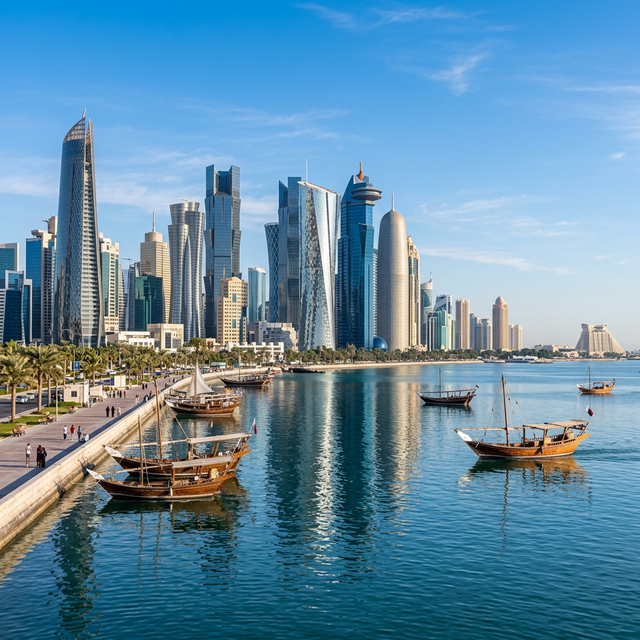
Qatar employs approximately 12,500 international teachers across 327 private schools, serving over 285,000 students in one of the world’s wealthiest nations per capita (GDP per capita of USD $87,661 in 2025). The tiny Gulf state — smaller than Connecticut at 11,581 km² — punches far above its weight in education quality, ranking 1st in the Arab world for primary education enrollment and teacher-to-student ratios according to UNESCO’s 2025 Global Education Report.
Post-FIFA World Cup 2022, Qatar’s infrastructure has reached a standard that rivals any global city. The Doha Metro (3 lines, 37 stations), Hamad International Airport (rated world’s best in 2024), and Education City — a 14 km² campus hosting branch campuses of Georgetown, Northwestern, Carnegie Mellon, and 5 other elite universities — demonstrate Qatar’s commitment to becoming a knowledge economy. For teachers, this translates to modern school facilities, well-resourced classrooms, and a government that prioritizes education spending at 3.6% of GDP.
Qatar’s compact size means everything is within 45 minutes’ drive. Teachers enjoy a cosmopolitan lifestyle centered on Doha’s Pearl Qatar district, Katara Cultural Village, and Souq Waqif, with weekend desert camping, beach access, and affordable flights to Dubai (1 hour), Muscat (1.5 hours), and major European cities (6–7 hours via Qatar Airways’ award-winning hub).
How much do international teachers earn in Qatar in 2026?
International teachers in Qatar earn QAR 10,000–24,000 per month (USD $2,747–$6,593) tax-free, with senior leadership positions reaching QAR 28,000–40,000. Qatar’s teaching packages are among the most generous in the GCC, with many schools providing fully furnished accommodation rather than cash allowances, significantly reducing teachers’ initial relocation costs and ongoing expenses.
Salary ranges by school tier
| School Tier | NQT (QAR/month) | Mid-career (QAR/month) | Senior Leader (QAR/month) |
|---|---|---|---|
| Tier 1 (premium international) | 12,000–15,000 | 17,000–24,000 | 25,000–40,000 |
| Tier 2 (established international) | 10,000–13,000 | 14,000–19,000 | 20,000–28,000 |
| Tier 3 (community/newer schools) | 8,500–11,000 | 11,000–15,000 | 16,000–22,000 |
| Qatar Foundation schools | 13,000–16,000 | 18,000–25,000 | 26,000–38,000 |
Qatar Foundation-affiliated schools (including Qatar Academy campuses in Doha, Al Khor, Al Wakra, Sidra, and Msheireb) offer premium packages that include furnished company villas, annual flights for families of up to 4, comprehensive medical coverage, and children’s tuition at Qatar Foundation schools valued at QAR 45,000–65,000 per child per year. These positions are the most competitive in the Qatari market. Compare packages across all 6 GCC countries in our Middle East teacher salary guide.
What qualifications do you need to teach in Qatar?
Qatar’s Supreme Education Council requires a bachelor’s degree, a recognized teaching qualification (PGCE, QTS, B.Ed, or state license), and a minimum of 2 years’ post-qualification experience for work permit eligibility. Degree attestation involves verification by the teacher’s home country ministry of foreign affairs followed by Qatar Embassy attestation, costing approximately QAR 1,000–2,000.
Qatar places particular emphasis on subject specialization — teachers must demonstrate degree-level study in the subject they intend to teach. A general studies degree with a PGCE may be insufficient if the teaching subject doesn’t align with the degree major. STEM teachers (mathematics, physics, chemistry, biology, computer science) are in highest demand with 42% more vacancies than Arts and Humanities positions. Learn more about required qualifications for Middle East teaching.
What visa and work permit do teachers need for Qatar?
Teachers require a work residence permit (QID — Qatar Identity Card) sponsored by their employing school. The school handles the entire process: contract attestation at the Ministry of Labour, medical examination upon arrival, QID issuance within 30 days of entry. Qatar abolished the kafala (sponsorship) system in 2020, allowing workers to change jobs without employer consent after serving their notice period — a significant improvement for teacher mobility.
The visa process takes 4–8 weeks from contract signing to entry. Teachers can sponsor spouses and children under 25 (one of the most generous age thresholds in the GCC). Qatar introduced a permanent residency card in 2018 for long-serving expatriates, available to teachers who have lived in Qatar for 20+ consecutive years or made exceptional contributions to the country.
Which are the top international schools in Qatar?
Qatar’s 327 private schools include some of the Middle East’s most prestigious institutions, many purpose-built with facilities rivaling university campuses. Education City alone houses 6 schools within Qatar Foundation’s ecosystem.
Qatar Foundation Schools — Qatar Academy campuses (Doha, Al Khor, Al Wakra, Sidra, Msheireb) operate under Qatar Foundation with IB curriculum from PYP through DP. These schools offer the most comprehensive packages including compound-style housing, highest salary bands, and access to Education City’s university resources. Staff retention averages 85% — the highest in Qatar.
Doha College — Founded in 1980, Qatar’s oldest British-curriculum school serving 1,680 students from 83 nationalities. Offers IGCSE and A-Level programs with an outstanding reputation for pastoral care and staff development.
Doha British School (DBS) — Two campuses (Ain Khaled and Al Wakra) following the English National Curriculum to A-Level. Known for strong CPD programs and competitive packages attracting experienced UK teachers.
ACS Doha International School — American-curriculum school offering AP and IB Diploma programs. Part of the ACS International Schools network with campuses in London, Bahrain, and Doha.
SABIS® International School — Operates in Doha using the SABIS® Educational System with its data-driven AMS monitoring approach. Ideal for teachers who value structured pedagogy and technology-enhanced instruction. Learn about the SABIS educational approach.
What is the hiring season for teaching jobs in Qatar?
Qatar’s primary recruitment window runs from October to February, with academic years starting in September. Qatar Foundation schools begin recruiting up to 14 months in advance due to high demand and thorough onboarding processes. Most other international schools advertise from November, with interview peaks in January–February at major recruitment fairs.
The Qatar market is smaller than the UAE or Saudi Arabia, meaning fewer positions but less competition — approximately 1,800–2,400 international teaching positions open annually. Mid-year openings (April–July) are less common but occur as teachers relocate or take maternity leave. See optimal timing for Middle East teaching applications.
How much does it cost to live in Qatar as a teacher?
A single teacher in Doha spends QAR 3,500–6,500 per month on living costs excluding rent. Qatar’s cost of living sits between the UAE and Saudi Arabia — approximately 15% cheaper than Dubai but 20% higher than Riyadh. Key expenses: groceries (QAR 1,000–1,800), transportation (QAR 400–1,200), dining (QAR 800–1,500), and utilities (QAR 300–600 including water, electricity, and internet).
Teachers with furnished company housing (common in Qatar Foundation and Tier 1 schools) report monthly expenses of QAR 2,500–4,500, enabling savings of QAR 7,000–15,000 per month. Even teachers on housing allowances find affordable options in Al Gharafa, Al Rayyan, and Al Thumama at QAR 3,500–6,000 for a furnished one-bedroom apartment. Qatar has no sales tax or VAT on most goods.
What are the best areas for teachers in Qatar?
As a single-city state, virtually all teaching positions are in or around Doha. Popular teacher neighborhoods include:
The Pearl Qatar — A man-made island with Mediterranean-inspired architecture, upscale dining, and marina views. Apartments run QAR 5,500–9,000/month. Popular with single teachers and couples seeking a vibrant social scene.
West Bay — Doha’s CBD with dramatic skyline views, direct metro access, and proximity to Doha Corniche. Rents of QAR 5,000–8,000 for modern high-rises. Walking distance to Souq Waqif and the National Museum of Qatar.
Al Gharafa / Al Rayyan — Suburban areas with family-friendly compounds, quieter atmosphere, and rents of QAR 3,500–6,000. Many schools are located in these areas, reducing commute times to under 15 minutes. Explore the full guide to teaching and living in Doha.
Frequently asked questions about teaching in Qatar
Is Qatar family-friendly for teachers?
Qatar is exceptionally family-friendly. The country offers free public parks (Aspire Zone with Olympic facilities, Al Bidda Park), world-class healthcare (Sidra Medicine is a dedicated women’s and children’s hospital), and one of the lowest crime rates globally. Schools typically allow spousal employment on dependent visas, and many offer tuition discounts of 75–100% for up to 3 children.
What is the social life like in Qatar for teachers?
Qatar’s social scene has expanded significantly since the World Cup. Teachers can enjoy licensed hotel restaurants and bars, the annual Doha Film Festival, international sporting events (Qatar MotoGP, ATP/WTA tennis), desert safaris, and kayaking in the mangroves of Al Thakira. The international teaching community is tight-knit, with regular social events organized through Facebook groups and school communities. Weekend trips to Bahrain (1 hour flight or 4-hour drive via Saudi Arabia) offer additional entertainment.
How does Qatar compare to the UAE for teachers?
Qatar offers slightly higher average salaries for equivalent experience levels, more frequent provision of furnished housing (vs. cash allowances), and a quieter lifestyle. The UAE offers more school choice (693 vs. 327 private schools), greater entertainment variety, and more diverse city options. Teachers prioritizing savings and a close-knit community often prefer Qatar; those seeking a bustling social scene and career mobility prefer the UAE. Our best country to teach in the Middle East guide provides a detailed side-by-side comparison.
Currently hiring: Browse open teaching positions in Doha →
