Why teach in Kuwait in 2026?
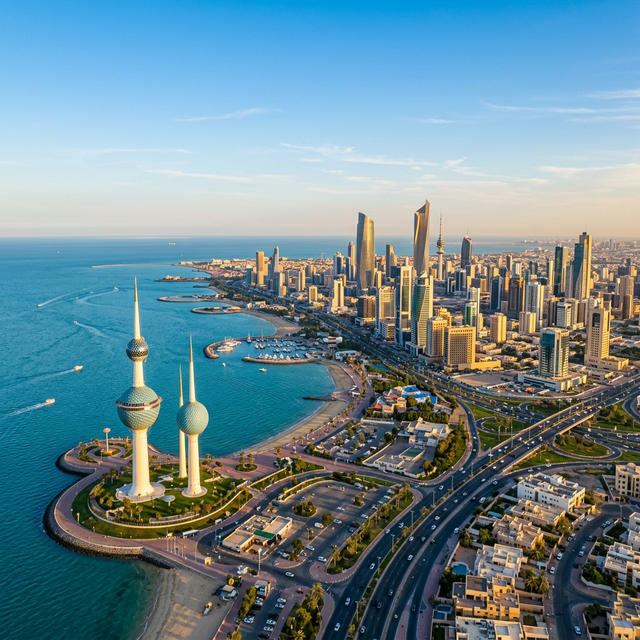
Kuwait employs approximately 14,200 international teachers across 582 private schools, educating over 342,000 students in a country where education spending represents 6.1% of GDP — the highest ratio in the GCC region. Despite being geographically small (17,818 km²), Kuwait operates one of the most well-funded private education systems in the Middle East, with over 70% of Kuwaiti families choosing private schooling for their children.
The Kuwaiti Dinar (KWD) is the world’s strongest currency, making Kuwaiti salaries exceptionally valuable when converted to USD, GBP, or other home currencies. A mid-career teacher earning KWD 1,200/month takes home the equivalent of USD $3,900 — competitive with the UAE while enjoying 25–30% lower living costs. Kuwait’s New Kuwait Vision 2035 has allocated KWD 2.2 billion to education modernization, including 40 new school buildings and curriculum reform across 167 bilingual schools.
Kuwait offers a genuine Middle Eastern cultural experience that has remained more traditional than Dubai or Doha. Teachers enjoy authentic Arabian hospitality, the historic Souq Mubarakiya, desert camping culture, and proximity to weekend getaways in Bahrain (1 hour flight) and Dubai (1.5 hour flight). The tight-knit expatriate teaching community creates strong social bonds, with many teachers describing Kuwait as their most personally rewarding Gulf posting.
How much do international teachers earn in Kuwait in 2026?
International teachers in Kuwait earn KWD 700–1,800 per month (USD $2,275–$5,850) tax-free, with senior leaders earning up to KWD 2,500. Due to the strength of the Kuwaiti Dinar, even moderate KWD salaries translate to strong purchasing power. Most schools provide housing allowances of KWD 150–400/month on top of base salary, and some offer furnished company apartments.
Salary ranges by experience level
| Role | KWD/month | USD equivalent | Typical package additions |
|---|---|---|---|
| NQT / Early Career (0-2 yrs) | 700–950 | $2,275–$3,090 | Housing allowance, annual flight |
| Teacher (3-5 yrs) | 950–1,300 | $3,090–$4,225 | Housing, flights, medical, gratuity |
| Experienced Teacher (5-10 yrs) | 1,200–1,600 | $3,900–$5,200 | Full package with tuition discount |
| Head of Department | 1,400–1,800 | $4,550–$5,850 | Full package, leadership allowance |
| Senior Leader / Principal | 1,800–2,500 | $5,850–$8,125 | Premium housing, car allowance |
Kuwait’s indemnity (end-of-service) payment is among the most generous in the GCC: 15 days’ salary per year for the first 5 years and 1 full month’s salary per year thereafter — paid as an untaxed lump sum on contract completion. A teacher completing a 5-year contract at KWD 1,200/month receives approximately KWD 3,000 in indemnity alone. Compare across all GCC countries in our Middle East teacher salary guide.
What qualifications do you need to teach in Kuwait?
Kuwait’s Ministry of Education requires a bachelor’s degree (minimum), a teaching qualification (PGCE, QTS, B.Ed, or state license), and at least 2 years’ post-qualification experience for private school employment. Degree attestation must be completed by the teacher’s home embassy and subsequently by the Kuwaiti Ministry of Foreign Affairs, a process taking 3–6 weeks and costing approximately KWD 50–100.
Kuwait has 187 British-curriculum schools (the largest segment), 132 American-curriculum schools, and 48 bilingual schools offering combined Arabic-English programs. Subject demand mirrors GCC-wide trends: mathematics, science, and English teachers are most sought-after, with 38% more vacancies in STEM subjects than humanities. Check specific credential requirements in our qualifications and hiring guide.
What visa and work permit do teachers need for Kuwait?
Teachers need an Article 18 work visa sponsored by their employing school, which provides residency for 1–2 years (renewable with contract). The school initiates the process by obtaining a work permit from the Public Authority for Manpower (PAM), followed by visa issuance at the Kuwaiti Embassy in the teacher’s home country.
The process timeline: work permit approval (2–4 weeks), visa issuance (1–2 weeks), arrival medical examination (48–72 hours), civil ID (Kuwait’s equivalent of Emirates ID) issued within 30 days. Kuwait requires a police clearance certificate from each country where the teacher has lived for 6+ months in the past 10 years. Spousal sponsorship requires a minimum salary of KWD 450/month — met by virtually all international teaching packages.
Which are the top international schools in Kuwait?
Kuwait’s 582 private schools range from established institutions founded in the 1960s to modern campuses built in the last decade. The most prominent employers include:
The English School (TES) — Founded in 1953, Kuwait’s oldest British-curriculum school serving 2,100 students across primary and secondary. Known for strong academic outcomes, experienced teaching staff (average tenure 6.3 years), and competitive packages with furnished housing.
The American School of Kuwait (ASK) — Established in 1964, offering US curriculum through AP programs. 1,800 students, NEASC-accredited, with packages including compound housing in the Salwa area.
Kuwait English School (KES) and British School of Kuwait (BSK) — Both offer IGCSE and A-Level programs with strong KHDA-equivalent ratings from Kuwait’s Private Education Office. BSK operates a purpose-built 42,000 m² campus in Salwa.
SABIS® International School Kuwait — Offers the SABIS® Educational System with structured approach to teaching and comprehensive student monitoring. Ideal for teachers seeking a well-defined pedagogical framework. Learn about SABIS methodology and career opportunities.
Universal American School (UAS) — IB World School offering PYP, MYP, and DP programs. Accredited by CIS and MSA, with an international student body of 1,400 from 65 nationalities.
What is the hiring season for teaching jobs in Kuwait?

Kuwait’s primary hiring season runs from November to March, with the academic year starting in September. The smaller market (compared to the UAE) means positions are filled quickly — teachers should apply within 2 weeks of listings appearing. Around 2,000–2,800 international positions open annually, with turnover concentrated in January–March as teachers decide on contract renewals.
Kuwait’s unique “summer exodus” — when many teachers travel for the entire 8-week summer break — means schools sometimes face late resignations in August, creating urgent vacancies filled with reduced processing timelines. See our application timing guide for strategic planning.
How much does it cost to live in Kuwait as a teacher?
Kuwait is one of the most affordable GCC countries for daily living, with single teachers spending KWD 200–400 per month (USD $650–$1,300) on non-housing expenses. Government fuel subsidies keep petrol at KWD 0.085/liter (among the cheapest globally), groceries are subsidized at co-operative societies, and dining ranges from KWD 1.5–3 at local restaurants to KWD 10–25 at international venues.
Rent (if not employer-provided) ranges from KWD 200–500 for a furnished one-bedroom apartment in popular teacher areas like Salmiya, Hawally, and Mangaf. Teachers on full packages with provided housing report saving 55–70% of their monthly salary — among the highest savings rates in the Middle East.
What are the best areas for teachers in Kuwait?
Salmiya — Kuwait’s most popular expatriate neighborhood with restaurants, cafés, the marina, and Sea Front promenade. Rents: KWD 250–450/month. Walkable and lively.
Hawally — Bustling multicultural district with affordable dining and shopping. Budget-friendly rents of KWD 180–350. Strong Indian, Pakistani, and Filipino community presence.
Salwa & Mishref — Quieter residential areas near many international schools. Family-friendly compounds with rents of KWD 300–500. Close to the Avenues Mall (780 stores, Kuwait’s largest).
Mangaf & Fahaheel — Southern coastal areas near oil company compounds. Beach access, lower rents (KWD 200–350), and proximity to Ahmadi — Kuwait Oil Company’s residential hub.
Frequently asked questions about teaching in Kuwait
Is Kuwait a good destination for first-time teachers abroad?
Kuwait is excellent for first-time overseas teachers due to lower competition for positions compared to the UAE, strong savings potential even on entry-level salaries, a genuine cultural experience, and a supportive expatriate community. The more traditional environment provides deeper cultural immersion than more Westernized Gulf cities, which many teachers find enriching. Read our guide to teaching abroad without experience.
What is the social life like in Kuwait?
Kuwait is an alcohol-free country, which shapes the social scene differently from the UAE or Bahrain. Social life centers on dining (Kuwait has a thriving food scene), beach clubs, desert activities, cinema (Kuwait has the region’s most modern multiplex network), and community events. Many teachers join sports leagues, book clubs, and outdoor groups. Weekend trips to Bahrain (1 hour flight, alcohol available) and Dubai (1.5 hours) are common.
How does Kuwait’s summer weather affect teachers?
Summer temperatures in Kuwait regularly exceed 50°C (122°F) from June to August, among the hottest on Earth. However, this coincides with the 8-week summer break when most teachers travel. During the academic year (September–June), temperatures range from a pleasant 15–25°C in winter (November–March) to 35–45°C during spring and autumn terms. All schools, homes, and public spaces are air-conditioned.
Kuwait offers an authentic Gulf experience with strong financial rewards and a lower profile than its flashier neighbors. For teachers seeking meaningful savings, cultural depth, and a close-knit community, Kuwait remains one of the Middle East’s most underrated teaching destinations.
Compare Kuwait with teaching in the UAE, Saudi Arabia, Qatar, Oman, and Bahrain. Or read our best country to teach in the Middle East comparison.
