The STEM Teacher Shortage: A Regional Crisis and Opportunity
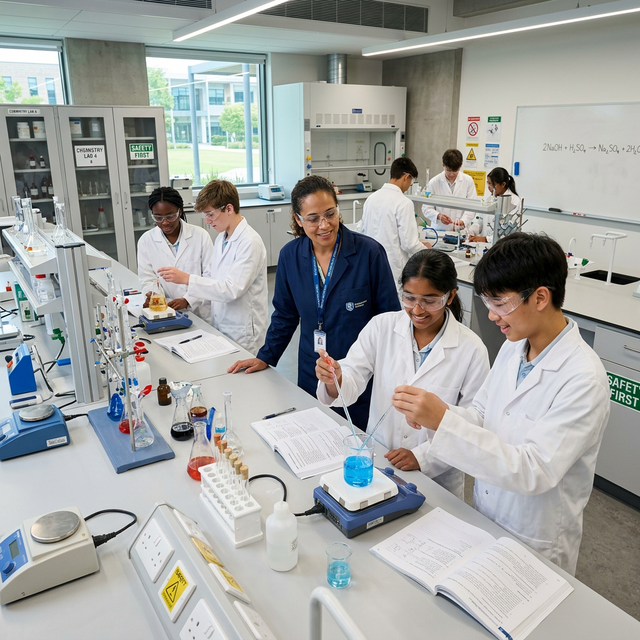
The Middle East is facing a significant and growing shortage of qualified STEM (Science, Technology, Engineering, and Mathematics) teachers. This shortage, which mirrors global trends but is amplified by the region’s rapid educational expansion, represents one of the most pressing challenges for international schools across the Gulf states — and one of the greatest opportunities for teachers with STEM expertise. In 2026, the demand for STEM teachers in the UAE, Qatar, Saudi Arabia, Kuwait, Bahrain, and Oman has reached unprecedented levels, driven by national economic strategies, curriculum reforms, and a booming international school market.
For teachers qualified in physics, chemistry, mathematics, computer science, design technology, or engineering, the Middle East offers not just employment but a career advantage: higher salaries, faster promotion, and the chance to shape STEM education in some of the world’s most well-resourced schools.
Why STEM Teacher Demand Is Growing
Vision 2030 and National Economic Strategies
Every Gulf state has a national economic diversification strategy that places STEM education at its core. Saudi Arabia’s Vision 2030, the UAE’s Centennial 2071 plan, Qatar’s National Vision 2030, and similar programmes in Kuwait, Bahrain, and Oman all explicitly call for a workforce equipped with science, technology, and engineering skills. These strategies have triggered massive investment in STEM-focused curricula, new school construction, and teacher recruitment campaigns targeting STEM specialists from the UK, US, Canada, Australia, and beyond.
Industrialisation and the Knowledge Economy
As Gulf economies move beyond oil and gas, industries such as aerospace, artificial intelligence, renewable energy, healthcare technology, and advanced manufacturing are growing rapidly. These industries require a pipeline of STEM-literate graduates, which in turn requires schools to deliver high-quality STEM education from primary through secondary. The demand is not just for subject knowledge but for teachers who can inspire students to pursue STEM careers.
STEAM Curriculum Adoption
Many international schools in the Middle East are transitioning from traditional subject-based teaching to integrated STEAM (Science, Technology, Engineering, Arts, and Mathematics) approaches. This shift requires teachers who can work across disciplines, design project-based learning experiences, and use technology creatively. Schools are creating new roles such as STEAM Coordinator, Innovation Lead, and Design Technology Teacher, further expanding the range of STEM-related positions available.
School Expansion
The number of international schools in the Middle East continues to grow. Dubai alone has over 220 private schools, Abu Dhabi has over 200, and Saudi Arabia is experiencing the fastest growth in the region. Each new school needs a full complement of STEM teachers, and existing schools are expanding their science and technology departments to meet rising enrolment and parental expectations.
STEM Teacher Salary Premiums by Subject
Not all STEM subjects command the same salary premium. The scarcity of available teachers varies by discipline, which directly affects compensation:
| Subject | Salary Premium Over Standard | Supply Level | Demand Level |
|---|---|---|---|
| Physics | 15 – 20% | Very Low | Very High |
| Computer Science / IT | 10 – 20% | Low | Very High |
| Chemistry | 10 – 15% | Low | High |
| Mathematics | 5 – 15% | Moderate | High |
| Design Technology / Engineering | 10 – 15% | Low | High |
| Biology | 0 – 5% | Moderate | Moderate |
| General / Combined Science | 0 – 5% | Moderate | Moderate |
Physics and computer science teachers command the highest premiums because the fewest qualified teachers enter these fields — graduates in these disciplines are heavily recruited by private industry. For detailed salary figures by country, see our Middle East teacher salary comparison and our physics teacher guide.
Which Countries Are Actively Recruiting STEM Teachers?
United Arab Emirates
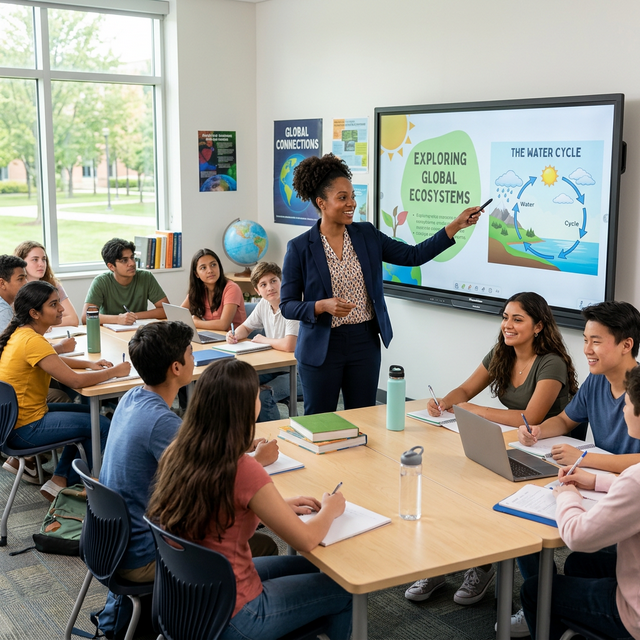
The UAE has the largest international school market in the Middle East and the highest absolute demand for STEM teachers. Dubai and Abu Dhabi combined have over 400 private schools, the vast majority of which deliver English-medium education. School groups including GEMS Education, Taaleem, Aldar Education, Cognita, and International Schools Partnership (ISP) run ongoing recruitment campaigns for STEM specialists.
Saudi Arabia
Saudi Arabia’s education sector is expanding faster than any other in the region. Vision 2030 has triggered the construction of hundreds of new schools and the reform of the national curriculum to emphasise STEM. International schools in Riyadh, Jeddah, and the Eastern Province are competing for STEM teachers, as are the Kingdom’s universities and corporate training centres. See our Saudi Arabia teaching guide for broader context.
Qatar
Qatar’s investment in education through Qatar Foundation and the wider school sector means STEM teachers are consistently in demand. The country’s smaller market means fewer total positions but very competitive salaries, particularly at Qatar Foundation schools. Our Qatar science teacher guide provides more detail.
Kuwait, Bahrain, and Oman
These smaller markets have growing international school sectors and are increasingly competing for the same pool of STEM teachers. Schools such as The English School Kuwait, St. Christopher’s School Bahrain, The British School Muscat, and American British Academy Oman offer competitive packages and a slightly slower pace of life than the larger Gulf cities.
Schools Actively Recruiting STEM Teachers in 2026
- GEMS Education (UAE) — ongoing recruitment across 60+ schools for physics, chemistry, maths, computer science, and DT teachers
- Aldar Education (Abu Dhabi) — STEM positions across 30+ schools
- Taaleem (Dubai) — recruiting for premium British and IB schools
- Qatar Foundation / Qatar Academy — IB science and maths positions
- SABIS International (Saudi Arabia, UAE, Oman) — network-wide STEM recruitment
- Cognita (Dubai) — expanding school portfolio with STEM focus
- Brighton College (Abu Dhabi, Dubai, Al Ain) — premium British curriculum, strong science departments
- Repton (Dubai, Abu Dhabi) — well-resourced STEM facilities
Future Outlook for STEM Teachers in the Middle East

The outlook for STEM teachers in the Middle East is exceptionally positive through 2026 and beyond. Several trends will sustain or increase demand:
- Continued school expansion: New schools continue to open across the Gulf, each requiring STEM departments
- AI and technology integration: Schools are adding computer science, robotics, and AI courses, creating new teaching positions
- Climate and sustainability: Environmental science and renewable energy topics are being integrated into curricula
- Higher parental expectations: Parents increasingly choose schools based on STEM outcomes, driving schools to invest in better STEM teaching
- University preparation: As more Gulf students aspire to study STEM at top global universities, schools need teachers who can deliver advanced-level content
For teachers considering their next career move, the message is clear: if you have STEM qualifications, the Middle East is actively looking for you. Explore our qualifications guide and school networks directory to begin your search.
Frequently Asked Questions
Which STEM subject is in highest demand in the Middle East?
Physics is consistently the hardest STEM subject to recruit for across the Middle East, followed closely by computer science. Chemistry and mathematics are also in high demand. Biology and general science are easier to recruit, meaning competition for these roles is slightly higher.
How much more do STEM teachers earn compared to other teachers?
STEM teachers can earn 5–20% more than teachers of non-shortage subjects, depending on the specific discipline and school. Physics and computer science teachers see the highest premiums (15–20%), while biology teachers may see little or no premium. Salary negotiation is more effective for STEM teachers due to the supply-demand imbalance.
Do I need specific qualifications to teach STEM subjects in the Middle East?
You need a bachelor’s degree in the relevant subject (or a closely related discipline), a recognised teaching qualification (PGCE/QTS, state licence, or equivalent), and at least 2 years of post-qualification experience. Curriculum-specific training (IB, A-Level, AP) is a significant advantage. For computer science, professional certifications and industry experience can supplement academic qualifications.
What is STEAM and how does it differ from STEM?
STEAM adds the Arts to STEM, reflecting the growing recognition that creativity and design thinking are integral to innovation. In the Middle East, many schools are adopting STEAM approaches that integrate arts, design, and creative problem-solving into science and technology teaching. Teachers with experience in project-based learning, design thinking, and cross-curricular collaboration are particularly valued.
Can non-STEM teachers retrain as STEM teachers to take advantage of this demand?
It is possible but requires significant investment. Teachers with degrees in related fields (e.g., engineering, nursing, environmental science) may be able to transition to STEM teaching with additional qualifications such as a subject-specific PGCE or SKE (Subject Knowledge Enhancement) course. However, schools generally prefer teachers with a degree directly in the subject they will teach, particularly for A-Level and IB roles.
Will STEM teacher demand decrease as more teachers enter the market?
The structural factors driving STEM teacher demand — global shortage of STEM graduates entering teaching, expanding school markets, and government economic strategies — are expected to persist for the foreseeable future. While some localised markets may see temporary easing of demand, the overall trend points to sustained or growing demand through 2026 and well into the 2030s.
