Choosing the right TEFL course is one of the most important decisions you will make before starting your teaching career in the Middle East. The region offers some of the highest-paying TEFL positions in the world, but employers in countries like the UAE, Saudi Arabia, Qatar, and Kuwait are increasingly selective about which certifications they accept. This comprehensive guide compares the top five TEFL course providers for aspiring teachers targeting Middle Eastern markets, helping you invest your money wisely and maximize your earning potential.
We have spent months researching, interviewing alumni, and analyzing employer preferences across the Gulf Cooperation Council (GCC) countries to bring you this definitive comparison. Whether you are looking for an affordable online option or a premium course with job placement support, this guide covers everything you need to know.
Quick Comparison Table: Top TEFL Courses for the Middle East

| Provider | Best Course | Price (USD) | Hours | Accreditation | Job Support | Best For |
|---|---|---|---|---|---|---|
| Premier TEFL | Level 5 TEFL Diploma | $399-$599 | 168 | ODLQC, ALAP | Job board + CV help | Budget-conscious, quick completion |
| i-to-i TEFL | Professional TEFL | $299-$499 | 140 | TEFL Org UK | Internship programs | Beginners, internship seekers |
| International TEFL Academy | Online TEFL Class | $1,399 | 170 | ACCET (US DoE) | Lifetime placement | Career changers, premium support |
| ITTT | Master TEFL Package | $449 | 220 | TSI, ALAP | Job board | Maximum hours, value seekers |
| Bridge TEFL | IDELTOnline | $999 | 150 | ACCET, university credit | BridgeTEFL jobs | Academic credibility, specializations |
What Middle East Employers Actually Look For
Before diving into individual course reviews, it is essential to understand what employers in the Middle East specifically require. Unlike Southeast Asia, where virtually any TEFL certificate opens doors, GCC countries have higher standards driven by their well-funded education systems and government mandates.
Most reputable language schools and international schools in the Middle East require a minimum of 120 hours of TEFL certification. However, many premium employers, particularly in Saudi Arabia and the UAE, prefer candidates with 150+ hours. Government-funded programs, such as those through Saudi Arabian language initiatives, often mandate specific accreditations recognized by their respective Ministries of Education.
The key accreditation bodies that carry weight in the Middle East include ACCET (recognized by the US Department of Education), TEFL Org UK, ODLQC (UK Open and Distance Learning Quality Council), and Cambridge Assessment English for CELTA holders. Having a certificate from a provider accredited by one of these bodies significantly strengthens your application for TEFL jobs in Dubai and across the Gulf.
1. Premier TEFL: Best Value for Middle East Job Seekers
Premier TEFL has rapidly become one of the most popular TEFL providers globally, and for good reason. Their courses offer an excellent balance of quality, affordability, and recognized accreditation. For teachers specifically targeting the Middle East market, Premier TEFL’s Level 5 TEFL Diploma stands out as the most strategic investment.
Courses Offered
Premier TEFL offers a tiered course structure ranging from 120 hours to their flagship 300-hour Level 5 Diploma. Their most popular options include the 120-hour TEFL Certificate ($199), the 168-hour Advanced TEFL ($399), and the Level 5 TEFL Diploma ($599). All courses are delivered entirely online with a mix of module-based learning, video content, and assessed assignments.
Accreditation and Recognition
Premier TEFL courses are accredited by ODLQC and regulated by Ofqual through their Level 5 qualification. This UK government recognition carries significant weight with employers in the UAE, Qatar, and Bahrain, where British educational standards are highly respected. Their accreditation is specifically recognized by major language school chains operating across the GCC.
Why It Works for the Middle East
The Level 5 TEFL Diploma is equivalent to the second year of a bachelor’s degree in the UK qualifications framework. This distinction matters in the Middle East, where some employers differentiate between basic TEFL certificates and higher-level qualifications. Teachers with Level 5 qualifications often command higher starting salaries, potentially earning an additional AED 1,000-2,000 per month in Dubai TEFL positions.
Premier TEFL also provides a dedicated job board featuring positions across the Middle East, CV templates tailored to Gulf employers, and interview preparation resources. Their career support team has established relationships with several major language schools in Dubai, Abu Dhabi, and Riyadh.
Pros and Cons
- Pros: Affordable pricing, UK-accredited Level 5 option, frequent sales and discounts, quick turnaround for certificate issuance, comprehensive teaching methodology modules
- Cons: No in-person teaching practice component, limited one-on-one tutor interaction compared to premium providers, job support is good but not as extensive as ITA
2. i-to-i TEFL: Best for Beginners and Internship Programs
i-to-i TEFL, now part of the TEFL Org family, has been providing TEFL qualifications since 1994. Their courses combine online study with optional in-person classroom experience days, creating a blended learning approach that appeals to many aspiring teachers. Their internship programs, while more focused on Asia, have been expanding into Middle Eastern markets.
Courses Offered
i-to-i offers courses from 60 hours to their 300-hour Professional TEFL package. The sweet spot for Middle East applicants is their 140-hour Professional TEFL course ($299-$499), which includes grammar modules, classroom management training, and lesson planning practice. They also offer TEFL with classroom experience add-ons held in various UK and international locations.
Accreditation and Recognition
As part of TEFL Org UK, i-to-i courses carry the TEFL Org accreditation, which is the UK’s most established TEFL accrediting body. This recognition is well-regarded across the Middle East, particularly in countries with strong ties to the British educational system. Their courses also meet the requirements set by most GCC Ministries of Education for foreign language teacher certification.
Why It Works for the Middle East
i-to-i’s structured approach to teaching methodology is particularly well-suited for the Middle East market. Their courses include specific modules on teaching adult learners and business English, both of which are in high demand across the Gulf. The platform also offers specialized add-on modules for teaching IELTS preparation, a significant market in the region given the number of students preparing for university admission in English-speaking countries.
Pros and Cons
- Pros: Strong TEFL Org UK accreditation, excellent beginner-friendly interface, optional classroom experience days, good grammar component, internship programs in select locations
- Cons: Internship programs have limited Middle East options, pricing can be confusing with numerous add-ons, certificate processing can take 2-3 weeks
3. International TEFL Academy (ITA): Best Premium Option with Lifetime Support
International TEFL Academy is the most expensive option on this list, but it also provides the most comprehensive support package. For career changers investing in a new profession, ITA’s lifetime job placement assistance and extensive alumni network in the Middle East make it a compelling choice despite the higher price tag.
Courses Offered
ITA offers a focused course catalog centered on their flagship 170-hour Online TEFL Class ($1,399) and their various in-person courses held at partner schools worldwide ($1,499-$1,899). Unlike other providers, ITA does not offer budget-tier courses. Their philosophy is one comprehensive program rather than a tiered approach.
Accreditation and Recognition
ITA’s standout accreditation is from ACCET, which is recognized by the US Department of Education. This is arguably the strongest accreditation available for TEFL courses and carries significant weight with international school chains, government programs, and university language departments across the Middle East. For teachers targeting premium positions in Saudi Arabia or Qatar, this accreditation can open doors that other certificates cannot.
Why It Works for the Middle East
ITA maintains an active network of alumni teaching throughout the Middle East, with dedicated regional advisors who specialize in GCC job placements. Their lifetime job search guidance means that even years after completing your course, you can contact ITA for updated job leads, salary negotiation support, and visa guidance. They also provide pre-departure orientation sessions specifically for teachers moving to the Middle East, covering cultural adaptation, professional expectations, and practical logistics.
Pros and Cons
- Pros: ACCET accreditation (US DoE recognized), lifetime job placement support, extensive alumni network, live online instruction with experienced teachers, comprehensive pre-departure support, strong Middle East placement record
- Cons: Significantly more expensive than competitors, no self-paced option for the main course, rigid schedule for live online classes, no budget alternatives
4. ITTT (International TEFL and TESOL Training): Best for Maximum Hours at Affordable Prices
ITTT has been providing TEFL and TESOL courses since 1993, making it one of the longest-running providers in the industry. Their standout feature is the sheer volume of study hours available at competitive prices, with packages reaching up to 470+ hours. For the Middle East market, where employers sometimes use hour counts as a screening criterion, ITTT offers excellent value.
Courses Offered
ITTT’s catalog is extensive, ranging from 120-hour courses ($249) to their comprehensive Master TEFL packages exceeding 220 hours ($449). They also offer in-person courses in select locations worldwide and combined online-plus-practicum options. Their courses cover general TEFL methodology, specialized TEFL for young learners, business English instruction, and TEFL for teaching online.
Accreditation and Recognition
ITTT holds accreditation from TSI (Teaching Skills International) and ALAP (Accreditation and Learning Attainment Partnership). While these accreditations are less widely known than ACCET or TEFL Org UK, they are accepted by the majority of private language schools in the Middle East. Government-funded programs and international school chains may, however, prefer ACCET or Ofqual-recognized qualifications.
Why It Works for the Middle East
The sheer breadth of ITTT’s course offerings allows teachers to build an impressive portfolio of specializations relevant to the Middle East market. Combining their core TEFL certificate with add-on modules in business English and IELTS preparation makes you a versatile candidate for language school positions across the Gulf. The 220+ hour package also positions you above the minimum requirements of most GCC employers.
Pros and Cons
- Pros: Excellent value for high-hour packages, wide range of specializations, 30+ years of industry experience, in-person course options available, generous course bundles
- Cons: Accreditation less prestigious than ACCET or TEFL Org UK, website can feel dated, career support is more passive than ITA, some courses feel content-light despite high hour counts
5. Bridge TEFL: Best for Academic Credibility and Specializations
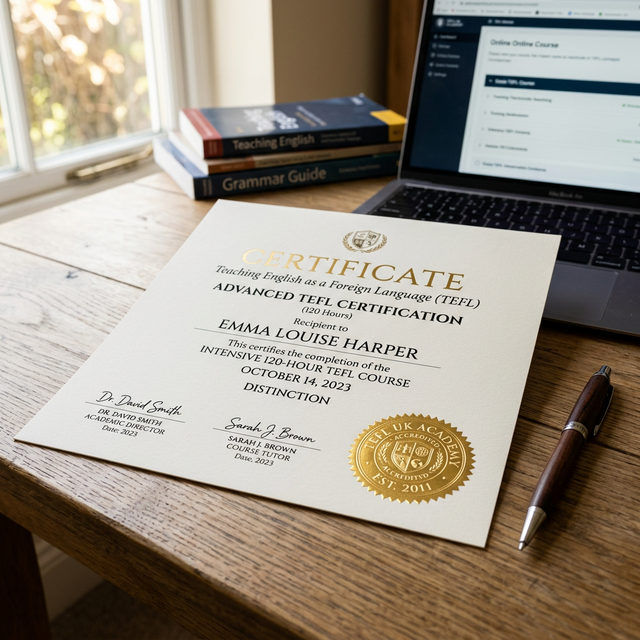
Bridge Education Group, commonly known as Bridge TEFL, stands out in the TEFL market for its strong academic partnerships and micro-credential system. Their IDELTOnline course, developed in partnership with a US university, offers graduate-level content and the option to earn university credit. For teachers targeting university-level positions or academic institutions in the Middle East, Bridge TEFL offers unique advantages.
Courses Offered
Bridge’s flagship offering is the IDELTOnline (International Diploma in English Language Teaching), a 150-hour course priced at approximately $999 that includes university credit options. They also offer the 120-hour Master Certificate ($499), along with dozens of specialized micro-credentials in areas like teaching IELTS, business English, English for specific purposes, and teaching with technology. Their recently introduced short courses focus on trending areas like teaching pronunciation and assessment design.
Accreditation and Recognition
Bridge holds ACCET accreditation, putting it on par with ITA for US Department of Education recognition. Their university partnership enables students to earn actual university credit hours, which can count toward future graduate studies. This dual credential approach is particularly valuable in the Middle East, where academic qualifications heavily influence hiring decisions and salary scales.
Why It Works for the Middle East
University language departments and higher education institutions in the Gulf increasingly prefer candidates with academic credentials beyond basic TEFL certification. Bridge’s university credit option and micro-credential system allows teachers to demonstrate specialized expertise relevant to Middle Eastern contexts. Their business English and IELTS preparation specializations are particularly valuable given the strong demand for these services across the GCC.
Pros and Cons
- Pros: ACCET accreditation, university credit options, extensive micro-credential catalog, strong academic partnerships, BridgeTEFL job board, excellent for career progression
- Cons: IDELTOnline is expensive compared to similar-hour courses, micro-credentials add up in cost, less focus on entry-level placement support, can feel overwhelming with too many options
Our Top Recommendations by Situation
Best Overall Value: Premier TEFL Level 5 Diploma
For most teachers targeting the Middle East, Premier TEFL’s Level 5 Diploma offers the best combination of recognized accreditation, comprehensive content, and affordable pricing. The UK government-regulated Level 5 qualification carries genuine weight with GCC employers, and the frequent sales make it accessible on most budgets. If you are looking to maximize your return on investment, this is our top pick.
Best for Career Changers: International TEFL Academy
If you are making a significant career change and want maximum hand-holding through the transition to teaching in the Middle East, ITA’s lifetime support and dedicated regional advisors justify the premium price. The ACCET accreditation also opens doors at the most prestigious institutions.
Best Budget Option: ITTT Master Package
For teachers on a tight budget who want maximum hours on their certificate, ITTT’s 220-hour Master Package offers unbeatable value. The high hour count meets or exceeds every Middle Eastern employer’s minimum requirements, and the included specializations make you a more versatile candidate.
Best for Academic Careers: Bridge TEFL IDELTOnline
Teachers targeting university positions or who plan to pursue a Master’s in TESOL should seriously consider Bridge TEFL. The university credit option and academic rigor set it apart for those on a long-term career trajectory in education.
How to Choose the Right TEFL Course for the Middle East
Selecting the right TEFL course depends on several factors specific to your situation. Consider the following when making your decision:
Your target country: If you are specifically targeting Dubai or the UAE, UK-accredited courses (Premier TEFL, i-to-i) tend to be well-received. For Saudi Arabia and government programs, ACCET-accredited courses (ITA, Bridge) may carry more weight.
Your budget: TEFL courses range from under $200 to nearly $1,500. Remember that a more expensive course is only worth it if the additional features (placement support, accreditation level) tangibly improve your job prospects and starting salary. The salary premium from a top-tier certification in the Middle East can be AED 2,000-4,000 per month, meaning even the most expensive course pays for itself within the first month or two.
Your timeline: Self-paced courses (Premier TEFL, ITTT) can be completed in as little as 2-4 weeks, while structured courses (ITA, Bridge IDELTOnline) typically take 10-12 weeks. If you have a job offer contingent on certification, the self-paced option may be necessary.
Your experience level: Complete beginners benefit from the structured approach of ITA or Bridge, while experienced teachers or those with related degrees can comfortably navigate self-paced courses and save money.
Understanding TEFL Accreditation for the Middle East Market
Accreditation confusion is one of the biggest challenges facing new TEFL teachers. The industry lacks a single global regulating body, which means multiple accreditation organizations exist with varying levels of recognition. For the Middle East specifically, the following hierarchy generally applies:
Tier 1 (Universally Accepted): Cambridge CELTA, Trinity CertTESOL, ACCET-accredited courses. These qualifications are accepted by virtually every employer in the Middle East without question.
Tier 2 (Widely Accepted): TEFL Org UK, Ofqual-regulated courses, ODLQC-accredited courses. These are accepted by the vast majority of private language schools and many international schools across the GCC.
Tier 3 (Generally Accepted): TSI, ALAP, and other smaller accreditation bodies. These are accepted by most private language schools but may face scrutiny from government programs, universities, and premium international schools.
For a deeper understanding of how accreditations work, see our detailed TEFL accreditation guide.
Making the Most of Your TEFL Certificate in the Middle East

Regardless of which course you choose, there are several strategies to maximize the value of your TEFL qualification in the Middle East job market. First, supplement your core certification with specialization modules in high-demand areas like business English, IELTS preparation, or young learners. These specializations can increase your starting salary by 10-20% and open doors to lucrative private tutoring opportunities.
Second, gain practical experience before arriving in the Middle East. Many TEFL providers offer virtual teaching practice or classroom observation hours. While not required, having practical experience on your CV demonstrates commitment and competence to prospective employers.
Third, build a professional teaching portfolio during your TEFL course. Save your lesson plans, materials you create, and any feedback from tutors. Many Middle Eastern employers request sample lesson plans during the interview process, and having a polished portfolio sets you apart from candidates who simply have a certificate number.
Finally, research your target country’s specific requirements before enrolling. Some countries have recently updated their TEFL requirements, and what was acceptable two years ago may no longer meet current standards. Our country-specific guides for teaching in Dubai, teaching in Saudi Arabia, and teaching in Qatar provide the most current requirements.
Frequently Asked Questions
Which TEFL course is most recognized in the Middle East?
Cambridge CELTA remains the most universally recognized TEFL qualification in the Middle East. However, among online TEFL courses, those with ACCET accreditation (International TEFL Academy, Bridge TEFL) are the most widely accepted. UK-accredited courses from Premier TEFL (Ofqual Level 5) and i-to-i (TEFL Org UK) are also well-regarded, particularly in the UAE, Bahrain, and Qatar where British educational standards carry significant weight.
Do I need a 120-hour TEFL or higher for the Middle East?
A minimum of 120 hours is required by most employers in the Middle East, but 150+ hours is increasingly preferred. Some government programs in Saudi Arabia and Qatar specify minimum hour requirements that exceed 120. For the best job prospects and starting salary, we recommend a course of at least 140-170 hours. Read our full analysis on whether a 120-hour TEFL is worth it.
Can I teach in the Middle East with an online TEFL certificate?
Yes, online TEFL certificates from accredited providers are accepted throughout the Middle East. The key factor is the accreditation of the provider rather than the delivery method. Some premium positions, particularly at universities and top-tier international schools, may prefer candidates with in-person teaching practice components, but the majority of language school and corporate training positions accept fully online certifications.
How long does it take to complete a TEFL course?
Self-paced online courses can theoretically be completed in 2-4 weeks with dedicated full-time study, though most students take 6-10 weeks studying part-time. Structured courses with live instruction, such as ITA’s Online TEFL Class, run for approximately 11 weeks. In-person intensive courses typically take 4 weeks of full-time study. We recommend not rushing through your course, as the teaching methodology knowledge you gain directly impacts your classroom effectiveness.
Which TEFL provider offers the best job placement in the Middle East?
International TEFL Academy (ITA) offers the most comprehensive job placement support for the Middle East, with dedicated regional advisors and lifetime assistance. Bridge TEFL also has a strong job board with Middle Eastern positions. Premier TEFL and ITTT offer job boards and CV support but are more self-service in approach. However, for TEFL jobs in Dubai and across the Gulf, proactive job searching through direct applications to schools is often more effective than relying solely on provider placement services.
Are expensive TEFL courses worth the investment for the Middle East?
The salary differential in the Middle East can be significant. A premium TEFL certification from ITA or Bridge can help you secure positions paying AED 12,000-15,000 per month versus AED 8,000-10,000 for entry-level positions. Over a two-year contract, the salary premium could amount to $25,000-$40,000 more. Viewed from this perspective, even a $1,399 course investment generates substantial returns if it helps you access higher-paying positions.
Should I get CELTA instead of an online TEFL for the Middle East?
CELTA is excellent but not strictly necessary for most TEFL positions in the Middle East. If you are targeting international school positions, British Council roles, or university-level teaching, CELTA provides a competitive advantage. For private language schools, corporate training, and general TEFL positions, a well-accredited online course is sufficient and significantly more affordable. Read our TEFL vs TESOL vs CELTA comparison for a detailed analysis.
